
WELCOME BONUS 200%
UP TO €1500 + 200
FREE SPINS
UP TO €1500 + 200
FREE SPINS
Home → Games
Casino games at Wildsino
Soft 17: the Ace counts 11 or 1
The Soft 17 rule allows the dealer to hit on an Ace valued at 11, reducing the house edge by approximately 0.2 percentage points compared to standing rules. This adjustment favors the player slightly but remains standard in many multi-deck games where dealers must draw until reaching a hard 17 or higher. Consequently, high rollers should verify this specific table rule before placing significant bets to ensure optimal expected value retention. Early surrender is not available here, which increases the casino's advantage further than in single-deck variants offering that protection.
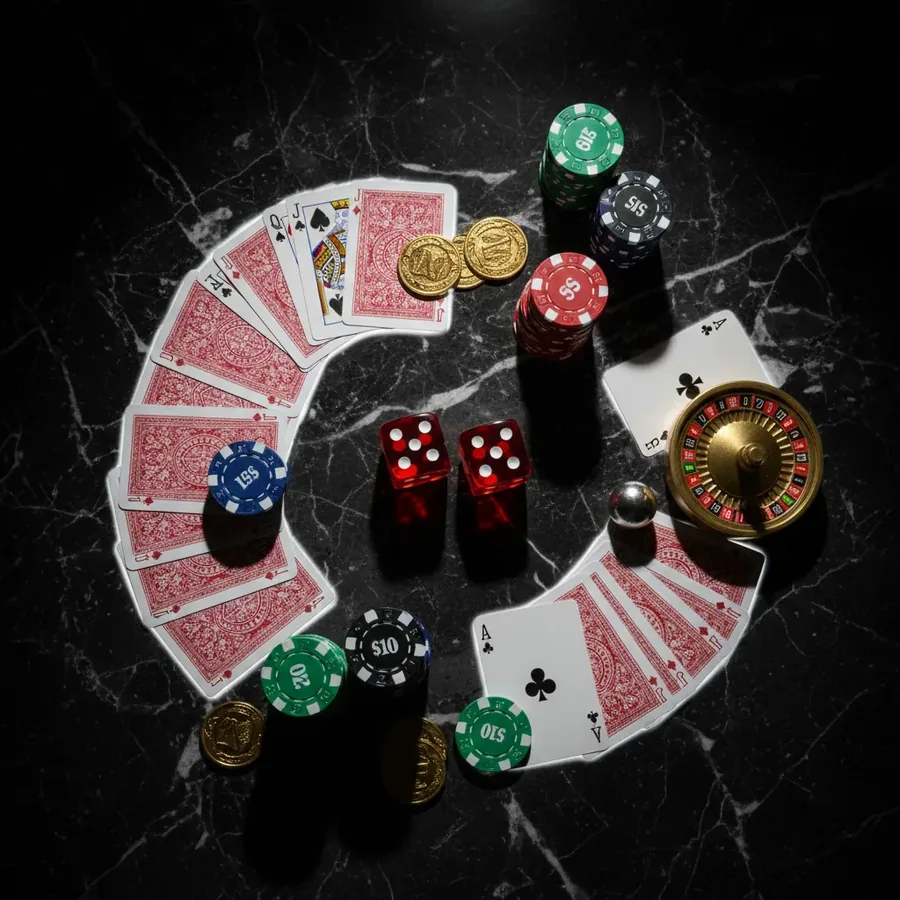
Hold or discard five cards: the decision
Holding five cards in Video Poker Jacks or Better typically results in a low return unless the hand contains a qualifying pair or high cards. The 8/5 paytable offers only 8 coins for a Full House and 5 for a Flush, significantly lowering the overall RTP to 97.29% compared to the industry standard 9/6 version. High stakes players must analyze each five-card hold carefully because minor strategy errors can push the house edge above 3 percent in these reduced-payout tables. Discarding all five cards is sometimes mathematically superior if no part of the hand qualifies for any payout tier.
The distinction between holding a low pair versus four cards to a royal flush defines the strategic complexity of these five-card decisions. A low pair guarantees a minimum Two Pair return, while chasing the royal flush relies on the rare occurrence of completing the straight or flush draws. Players betting maximum coins maximize the potential Royal Flush payout of 800 coins, which is essential for offsetting the lower Full House and Flush returns. This dynamic requires precise calculation of expected value for every possible discard combination during gameplay.
Jacks or Better: Check Payout Table Before Betting
The 8/5 Jacks or Better variant features a Full House paying 8 coins and a Flush paying 5 coins, resulting in an RTP of 97.29%. This pay structure reduces the theoretical return by 2.25 percentage points compared to the more favorable 9/6 tables commonly found in other venues. High rollers betting large amounts per hand must account for this increased house edge when calculating their long-term bankroll requirements. Every spin against this specific machine carries a higher cost basis due to the diminished payouts for mid-tier hands.
Corner Pays 8:1, Dozen Only 2:1
Cornets in French Roulette pay 8:1, while dozens and columns return only 2:1, establishing a consistent house edge of 2.70% across all bet types. Unlike European tables with La Partage rules, inner bets do not benefit from half-refunds on zero, maintaining the full disadvantage for the player. High stakes participants placing corner wagers face immediate exposure to this edge without the mitigation strategies available on even-money outside bets. The absence of special refund rules makes precision in bet selection critical for preserving capital over extended sessions.
Before sitting down: check table bet limits
Table bet limits determine the maximum exposure a high roller can sustain in a single round of Craps or Baccarat before hitting the casino ceiling. In Baccarat, the Banker bet yields a house edge of 1.06% with a 5% commission, making it the most efficient option for large volume play. Players must verify these limits beforehand to ensure their intended wagering scale aligns with the table's operational constraints. Failure to check limits can result in rejected transactions or forced adjustments to betting strategies during active gameplay.
Game categories at a glance
| Category | Examples | Stakes From | Highlight |
|---|---|---|---|
| Slots | Vikings Go Berzerk, Immortal Romance, San Quentin xWays | 0,10 EUR | thousands of titles |
| Table games | Roulette, Blackjack, Baccarat | 0,50 EUR | classic rules |
| Live casino | Blackjack Party, Speed Baccarat | 0,20 EUR | real dealers |
| Jackpot games | Mega Moolah, Divine Fortune, Age of the Gods | 0,20 EUR | progressive pools |
| Instant games | Aviator, Plinko, Mines | 0,10 EUR | fast rounds |
| Video poker | Jacks or Better, Deuces Wild | 0,25 EUR | strategy based |
Sic Bo Pays from 1:1 to 180:1
Sic Bo Small and Big bets pay 1:1 with a house edge of 2.78%, making them the most mathematically sound options on the board. This low edge contrasts sharply with the maximum payout potential of triplets, which reach up to 180:1 for specific combinations. High rollers seeking volatility can chase these massive returns while maintaining a baseline strategy anchored by the lower-risk side wagers.
The Atlantic City rules dictate that a triplet causes both Small and Big bets to lose, regardless of the sum rolled. This rule increases the effective variance compared to standard variations but keeps the RTP at 97.22%. Players must accept this structural disadvantage when placing wagers on sums between 4-10 or 11-17.
Straight, Split, and Corner: Three Terms Briefly Explained
A Straight bet covers a single number in French Roulette, paying 35:1 if the ball lands exactly on that chosen spot. This highest-paying outside wager carries a house edge of 2.70% because La Partage does not apply to inside bets. The risk is concentrated on one sector of the 37-number wheel, demanding precise selection for any potential return.
A Split wager sits on the line between two adjacent numbers, offering a payout of 17:1 upon success. This configuration doubles the coverage area compared to a Straight bet while halving the reward ratio proportionally. It remains a high-variance option within the French Roulette framework where no special refund rules mitigate losses.
A Corner bet spans four numbers arranged in a square on the layout, yielding an 8:1 payout when won. This structure allows players to cover multiple outcomes simultaneously with a single chip placement. The house edge stays constant at 2.70%, identical to all other inside roulette wagers in this game variant.
Straight 35:1 Instead of 36:1: Where House Edge Originates
The Straight bet pays 35:1 rather than the true odds of 36:1, creating the fundamental 2.70% house edge in French Roulette. This discrepancy exists because La Partage applies only to even-money bets, leaving inside wagers exposed to full loss on zero. The mathematical gap between fair probability and actual payout defines the casino's advantage on every spin.
Inside bets like Splits, Streets, and Corners share this same structural disadvantage without any protective rules attached. A player betting on a single number risks losing their entire stake whenever the ball hits the green zero. This absence of refund mechanisms distinguishes inside play from the more favorable red/black or odd/even categories.
The 2.70% edge persists regardless of bet size, impacting high rollers who place substantial chips on individual numbers. For example, a €1,000 Straight bet loses approximately €27 on average per spin due to this fixed percentage. Understanding this origin helps players manage bankroll expectations when targeting high payouts.
Declining Insurance: The Most Common Blackjack Mistake
Insurance bets in Blackjack carry a house edge significantly higher than the main game, often exceeding 5% depending on deck composition. Taking insurance when the dealer shows an Ace transforms a potentially winning hand into a guaranteed loss if the dealer has blackjack. This side bet drains bankrolls rapidly during sessions involving frequent dealer naturals.
The main Blackjack game offers an RTP of 98.15% with a 1.85% house edge using six decks and 6:5 payouts. Adding insurance worsens the overall expected value by introducing a separate, unfavorable wager with poor odds. Optimal strategy dictates declining insurance unless card counting provides a precise count advantage.
High rollers frequently fall into the trap of insuring large base bets, assuming it protects their capital against dealer blackjacks. However, the statistical disadvantage of the insurance bet outweighs any perceived safety benefit over time. Consistently rejecting insurance preserves the lower house edge inherent in the primary hand outcome.
Before Double Down: read the open dealer card
Double Down decisions in Blackjack depend heavily on the dealer's visible upcard, which indicates the probability of busting. Doubling on hard 11 against a dealer 6 yields a strong positive expectation due to the dealer's weak position. This strategic move maximizes profit potential when the odds clearly favor the player.
Conversely, doubling against a dealer Ace or Ten is generally discouraged as these cards complete strong hands for the house. The 1.85% house edge already accounts for optimal play, including correct double down applications. Misreading the dealer's strength leads to suboptimal returns and increased variance.
Players must analyze the open card before committing additional funds to a double down wager. A dealer showing 4, 5, or 6 presents the best opportunities for aggressive doubling strategies. Ignoring this critical information results in missed value and unnecessary exposure to the casino's mathematical advantage.
How Long Does a Roulette Round Take on Average?
French Roulette with La Partage features a house edge of 1.35% for even money bets like Red/Black, Odd/Even, and Low/High, which triggers a 50% stake refund if the ball lands on zero. This specific rule applies exclusively to these outside wagers, leaving inner bets such as Straight or Split without protection against the single zero. Consequently, players betting on outer options retain half their chip value during zero spins, effectively reducing the variance compared to standard European variants.
The En Prison rule yields the identical 1.35% house edge by allowing stakes to remain for another spin rather than being immediately halved upon hitting zero. While mathematically equivalent in expected value, the procedural difference alters the pace of play as chips are physically moved across the layout instead of returned to the player. This mechanical distinction impacts the time per round slightly but does not change the long-term statistical return of 98.65% on these specific bets.
Inner wagers like Corners paying 8:1 or Streets paying 11:1 do not qualify for La Partage or En Prison, meaning they suffer the full 2.70% house edge associated with European roulette. A player wagering 10 € on a Corner bet that loses to zero forfeits the entire amount, whereas an equal stake on Red would return 5 €. This disparity highlights why high rollers often restrict their roulette action to the protected even-money sections to preserve bankroll longevity.
Dozen 2:1 Hits 12 of 37 Numbers
A Dozen bet in French Roulette covers twelve numbers and pays 2:1, offering a hit probability of 12 out of 37 total sectors on the wheel. This wager sits between the low-risk even money bets and the high-reward straight numbers, providing a moderate balance of frequency and payout size. The house edge remains at 2.70% for this inner-adjacent bet, as the La Partage rule explicitly excludes it from any zero-protection mechanisms.
Comparing the Dozen payout to a Column bet reveals identical mathematics, as both cover exactly twelve numbers and pay 2:1 while carrying the same 2.70% disadvantage. Unlike the even money bets, neither option receives a half-stake refund when the ball stops on zero, resulting in a complete loss of the original wager. This structural similarity means strategic allocation between dozens and columns depends purely on player preference for table layout positioning.
The maximum theoretical win on a single dozen wager is limited by the 2:1 payout ratio, capping the return at double the stake plus the original chip back. For a high roller placing a 500 € bet, a winning spin generates a 1,000 € profit, distinct from the unlimited potential of progressive side bets in other games. This fixed ceiling ensures predictable volatility profiles for players managing large bankrolls across multiple roulette sessions.
Roulette Wheel with 37 vs 38 Pockets
French Roulette utilizes a wheel with 37 pockets, ranging from 0 to 36, which establishes a baseline house edge of 2.70% for most bets excluding the protected even money options. The absence of a double zero distinguishes this variant from American styles, directly influencing the probability distribution and the overall return to player percentage. This single-zero configuration allows for the implementation of special rules like La Partage, which further reduces the effective cost of playing even money wagers.
American Roulette typically features 38 pockets by adding a double zero, which increases the house edge to 5.26% for standard bets due to the additional losing sector. The presence of two zeros eliminates the possibility of applying La Partage or En Prison rules uniformly, as the mathematical advantage for the casino becomes significantly steeper. High rollers avoiding these tables mitigate risk by seeking out the 37-pocket variants where the initial statistical disadvantage is nearly halved.
The probability of hitting a specific number in the 37-pocket game is 1/37, whereas the 38-pocket version drops this chance to 1/38, subtly altering long-term expectations. When combined with the 35:1 payout for a Straight bet, the 37-pocket wheel returns 97.30% theoretically, while the extra pocket in the 38-version drags this figure down considerably. Players prioritizing optimal odds must therefore verify the pocket count before committing significant capital to any roulette table.
Baccarat Player Pair and Banker Pair side bets operate on eight decks with a staggering 10.36% house edge, making them statistically inferior to the main game outcomes. These side wagers pay 11:1, which translates to a 10:1 profit relative to the stake, yet the probability of forming a pair is too low to justify the risk. A 100 € bet on the Player Pair would lose an average of 10.36 € per hand over time, far exceeding the losses incurred on the primary Baccarat rounds.
Pass Line in Craps: Process in Four Steps
The Pass Line bet in Craps initiates the game cycle with a come-out roll, requiring a 7 or 11 to win immediately or a 2, 3, or 12 to lose. If any other number is rolled, that value becomes the point, and the shooter must roll it again before a 7 to secure the victory. This fundamental mechanic establishes a base house edge of 1.41%, corresponding to an RTP of 98.59% for the initial wager.
Once a point is established, players can place Free Odds bets behind their Pass Line stake, which carry a true 0.00% house edge because they pay at actual odds. For example, odds on points 4 or 10 pay 2:1, while odds on 6 or 8 pay 6:5, reflecting the exact mathematical probability of the dice. Combining the Pass Line with 3-4-5x odds reduces the overall combined house edge to just 0.37%, making it one of the fairest bets in the casino.
The standard deviation for a Pass Line bet is 1.00, indicating moderate volatility that suits high rollers looking for extended play sessions. Each individual roll contributes approximately 0.42% to the house advantage, accumulating slowly over hundreds of decisions rather than causing rapid bankroll depletion. This steady erosion of funds allows players to manage their limits more effectively compared to high-variance slot machines or table games with larger swings.
The Come bet mirrors the Pass Line mechanics exactly, allowing players to start new point cycles without waiting for the current shooter to sevens out. This feature enables continuous engagement and strategic layering of multiple active points simultaneously, maximizing the utility of the zero-edge Free Odds bets. By maintaining multiple concurrent wagers, experienced players can optimize their exposure to the favorable odds portion of the game.
What Doesn't Count Towards Bonus Wagering on Table Games?
Table games contribute only 10% to the bonus wagering requirement, meaning a 1,000 € bet on Blackjack or Roulette counts as just 100 € toward clearing the offer. This low contribution rate significantly extends the time needed to unlock withdrawable funds compared to slots, which count 100% toward the same target. High rollers utilizing the 300% welcome bonus up to €2,000 must account for this multiplier when planning their conversion strategy.
Video Poker Deuces Wild Full Pay offers a rare positive expectation of -0.76% house edge, but its table game classification still restricts its contribution to the mandatory 10% turnover. Even though optimal strategy yields an RTP of 100.76%, the casino's bonus terms treat it identically to other restricted categories, penalizing the player's ability to clear funds efficiently. This discrepancy forces players to choose between mathematical advantage and promotional accessibility.
Sic Bo Small and Big bets, despite having a relatively low 2.78% house edge, fall under the same 10% contribution rule for bonus clearance. The Atlantic City rules dictate that triples lose both bets, creating a 97.22% RTP that is superior to many slots but irrelevant to the wagering calculation speed. Consequently, using table games to convert the bonus requires substantially higher volume than slot play, increasing exposure to the house edge over time.
Baccarat Banker bets, which carry the lowest house edge of 1.06% among standard table options, are similarly capped at 10% contribution toward the wagering requirement. The 5% commission on wins does not alter the bonus tracking mechanism, which simply tallies the raw stake amount regardless of net profitability. Players seeking to minimize loss while meeting the turnover target must accept the inefficiency imposed by this category restriction.
Contact
Live - online chat
Banking









Providers












wildsino 2025